Is Gratitude the Secret of Happiness? | Gratitude & Meditation for Emotional Wellbeing
Okay, so let’s try to understand it.
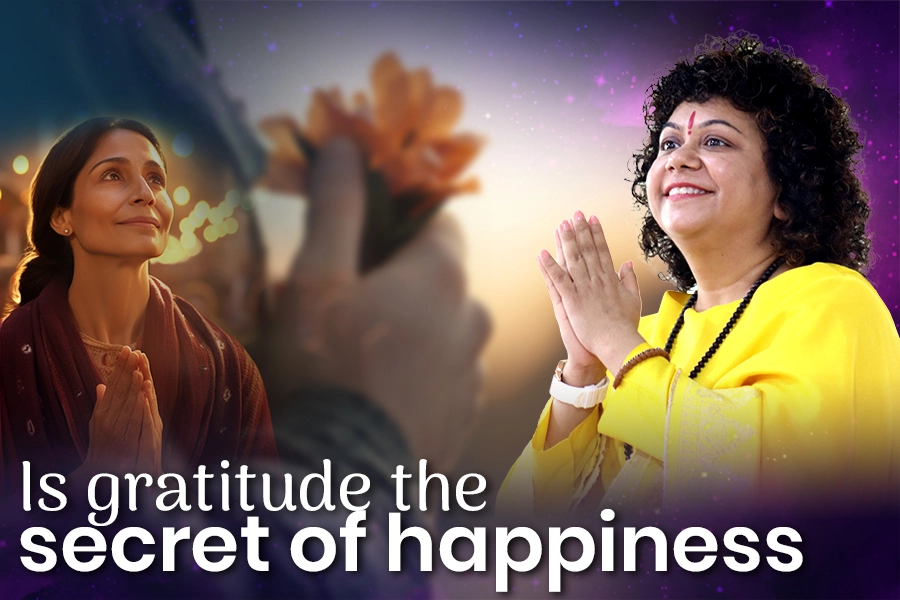
Is gratitude the secret of happiness?
What does constant complaining and cribbing about things do to you? Do you feel motivated to work, or do you lose the remaining enthusiasm to pursue your dreams or goals? You already know the answer. Continuous complaining drains your energy, clouds your thinking, and slowly pushes you into a state of dissatisfaction. When the mind keeps focusing on what is missing, it forgets to acknowledge what is already present. Practices taught in meditation courses online often begin by helping individuals become aware of these mental patterns.
So why not embrace gratitude, which supports opening the doors to new opportunities and leads you to abundance — not only in materialistic things but also in happiness, peace, and emotional balance? Many people searching how to learn gratitude discover that awareness and reflection are the first steps.
It is quite understandable for anyone undergoing difficult times to feel low, frustrated, or even helpless. During challenging phases, gratitude may feel difficult or unnatural. Pain, uncertainty, and disappointment can overpower positive thoughts. However, gratitude does not mean ignoring your struggles or pretending that everything is fine. Instead, it teaches acceptance and emotional understanding, which is why therapists often recommend meditation for emotional wellbeing.
It simply means choosing not to let difficulties define your entire reality. Even in the middle of chaos, there are small anchors that keep you steady, and gratitude helps you notice them. A structured approach such as gratitude training teaches you to consciously notice small positive experiences each day.
The practice of gratitude helps shift your focus from your current challenges to your blessings, from the smallest to the biggest ones. You can be grateful for anything. You are alive; that is one of the biggest blessings. Your organs, limbs, and body parts are functioning well. You are able to walk, talk, read, think, express yourself, and perform your daily tasks. Aren’t these things worth being grateful for? Many learners who enroll in meditation courses online report that daily awareness practices help them appreciate such simple moments.
Gratitude also trains the mind to pause and reflect rather than react. When you consciously practise gratitude, your awareness expands. You begin to notice moments of kindness, support, learning, and growth that were previously overlooked. This shift gradually reduces stress, anxiety, and negativity, making space for calmness and mental clarity. Over time, gratitude nurtures emotional resilience and inner strength. Because of this, gratitude practices are often included in the best meditation techniques taught by mindfulness teachers.
People often wonder what is gratitude training and how it works. In simple terms, it is a mental conditioning process where you train your mind to focus on appreciation instead of deficiency. Writing gratitude journals, mindful breathing, and reflection exercises are common methods. These techniques form a foundation of meditation for emotional wellbeing, as they calm the nervous system and improve emotional stability.
Scientific research also shows that gratitude improves sleep quality, reduces overthinking, and enhances overall life satisfaction. When practiced regularly along with guidance from meditation courses online, it gradually rewires your thought patterns toward positivity.
Happiness, therefore, is not always found in acquiring more but in recognising the value of what already exists. Gratitude may not eliminate life’s problems, but it certainly changes how you experience them. In that sense, gratitude may not be the only secret of happiness, but it is undoubtedly one of its strongest foundations. For anyone wondering how to learn gratitude, starting with small daily awareness practices and guided meditation can be a life-changing step.